

By Ryan Zelenka, Zelenka Development
An allowance is the placeholder dollar amount I put in your budget for a category I can’t price exactly yet — cabinets, plumbing fixtures, countertops — until you’ve picked the actual product. Allowances overrun when that placeholder number gets treated like a real quote instead of a starting point, and the gap between the two usually doesn’t show up until you’re standing in a showroom picking finishes. In this article, I’ll walk through what an allowance actually covers, why a lump-sum bid hides the line items that cause overruns, what changes when I build your budget line-item from day one, and the questions you should ask before you sign.
What an allowance actually is in a custom home budget
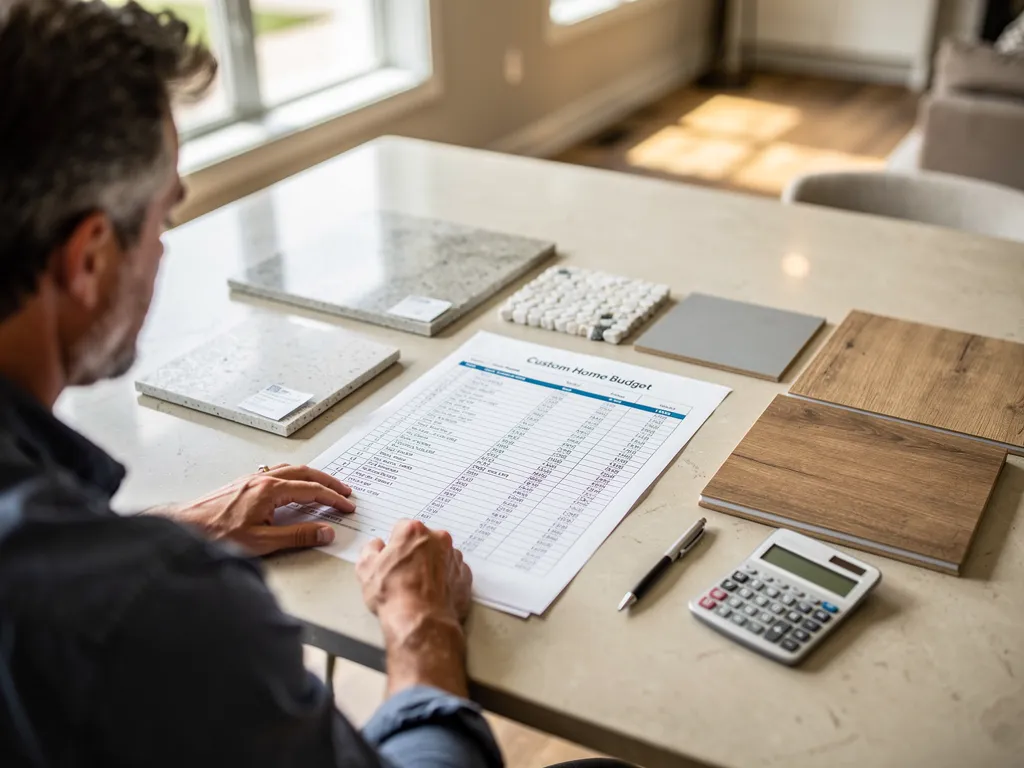
When I put together a budget for your home, an allowance is a placeholder dollar amount for categories where the finish isn’t picked yet — countertops, plumbing fixtures, flooring, appliances. It gives you room to choose within a price range while giving me a number to build the rest of the budget around. For countertops, for example, I might set an allowance that covers a mid-range quartz but not an imported marble slab — you can go either way, but the tier the number is built around tells you where the line sits.
Allowances also work as a running check on the budget: I use them to track what’s been spent and what’s left as the project moves along. Setting realistic numbers at the start — priced to what’s actually available at the counter, not a rounded guess — is what keeps the budget from drifting. The next section covers why allowances overrun in the first place, especially when a lump-sum bid hides the line items.
Why allowances overrun: a lump-sum bid hides the line items
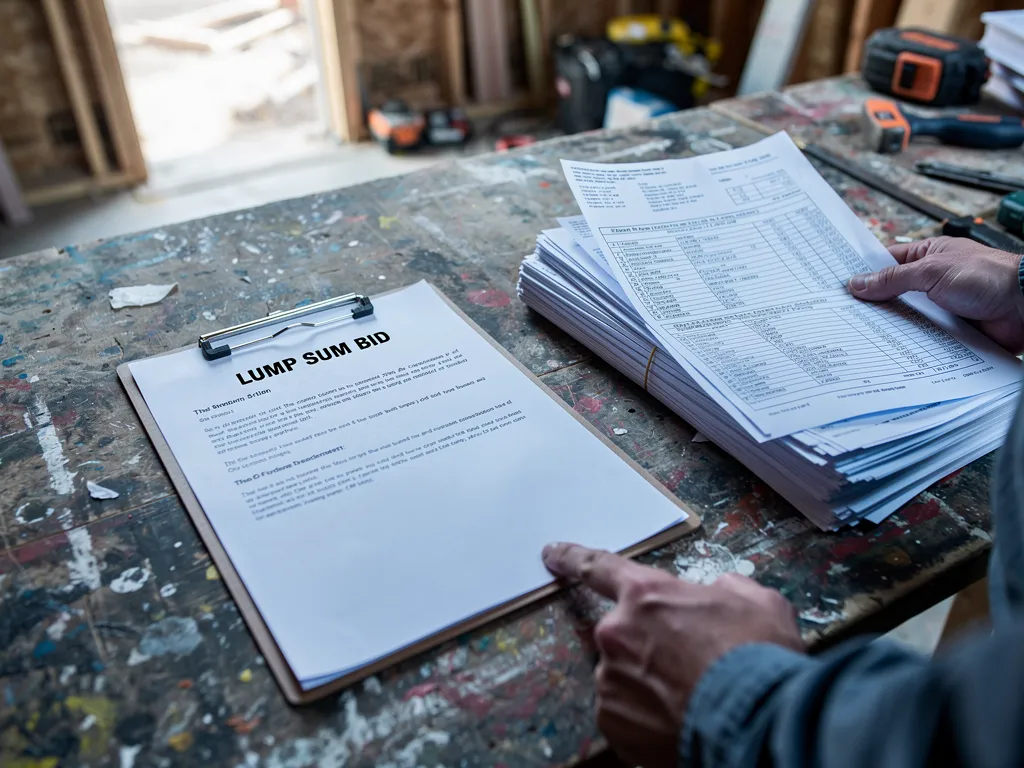
The core reason allowances overrun traces back to how a lump-sum bid is written. A lot of contractors hand you one total price for the whole job with no breakdown of what’s inside it. You don’t see the countertop number, the lighting package number, or the tile number — just the bottom line — so there’s no way to know which allowance is tight until you’re standing in the showroom picking a product.
That missing breakdown is what turns a normal upgrade into a surprise. You pick a nicer faucet or a larger-format tile, the allowance gets exceeded, and because you never saw the original number, you can’t tell whether it was ever realistic. Before you sign with any builder, ask for the dollar figure behind every allowance line and how it was priced.
I build every project on a transparent line-item budget so you see each allowance instead of one lump sum. That’s how you catch a tile upgrade or an appliance swap against the actual number before it eats into your contingency, not after the invoice arrives.
What changes when the budget is line-item from day one
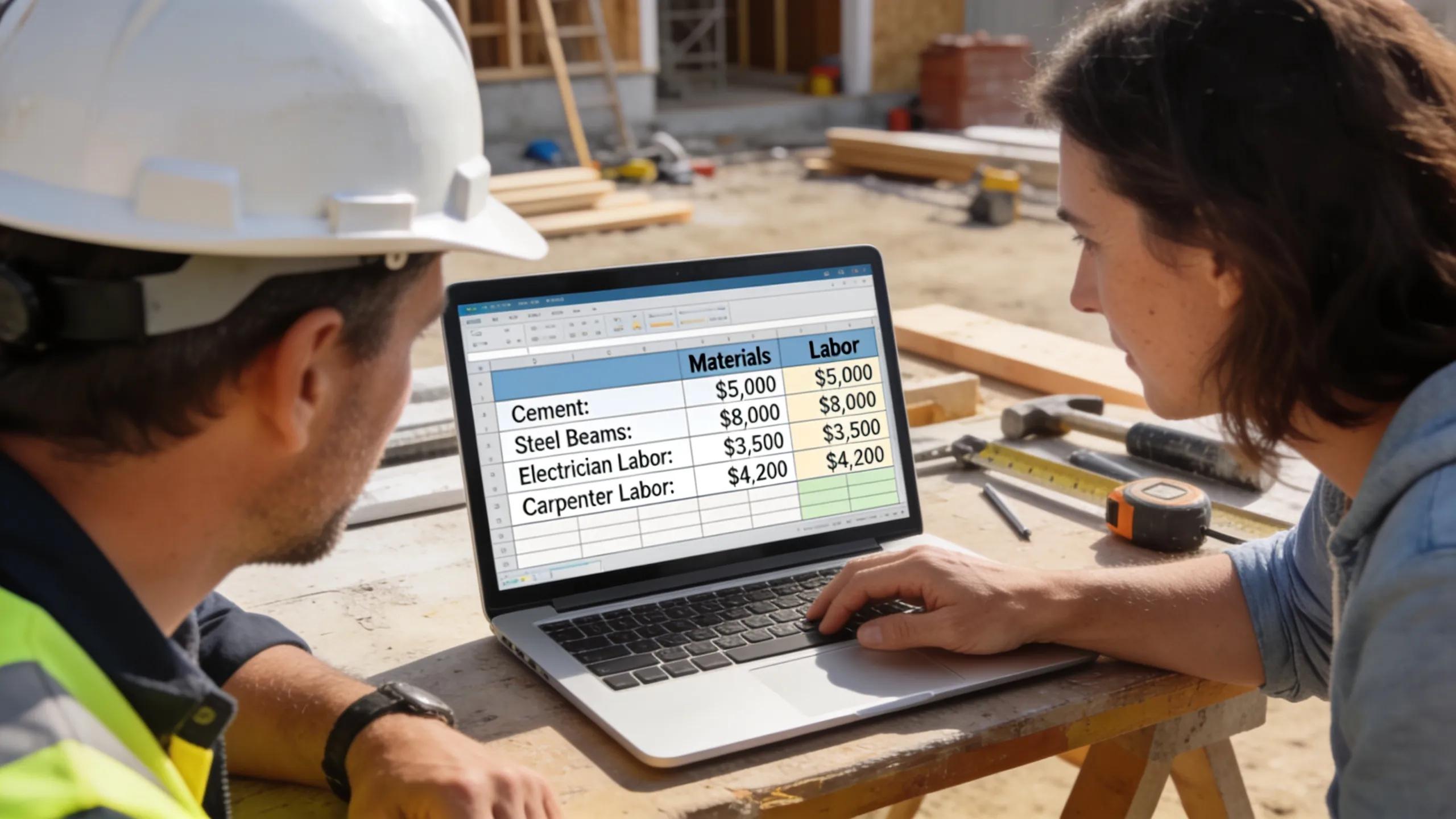
Building your budget line-item from day one changes what you can see and when. Instead of one number for “finishes,” you get a separate line for cabinets, a separate line for countertops, a separate line for tile, and a separate line for plumbing fixtures — each with a dollar figure attached before you’ve chosen a single product. That’s what lets you weigh a stone countertop upgrade against the flooring allowance without losing track of the total.
A line-item budget also lets me adjust in real time as you make selections. If you come in over on tile, I can show you exactly which other line has room, instead of guessing at what the whole budget can absorb. That kind of running visibility is what keeps a project on track from the first selection meeting to the last one.
Here’s how the two approaches compare directly.
That’s the practical difference between the two approaches, and it’s why I default every contract to line-item pricing. Next, here’s how a placeholder figure actually plays out before you make a selection.
Seeing the placeholder number before you choose
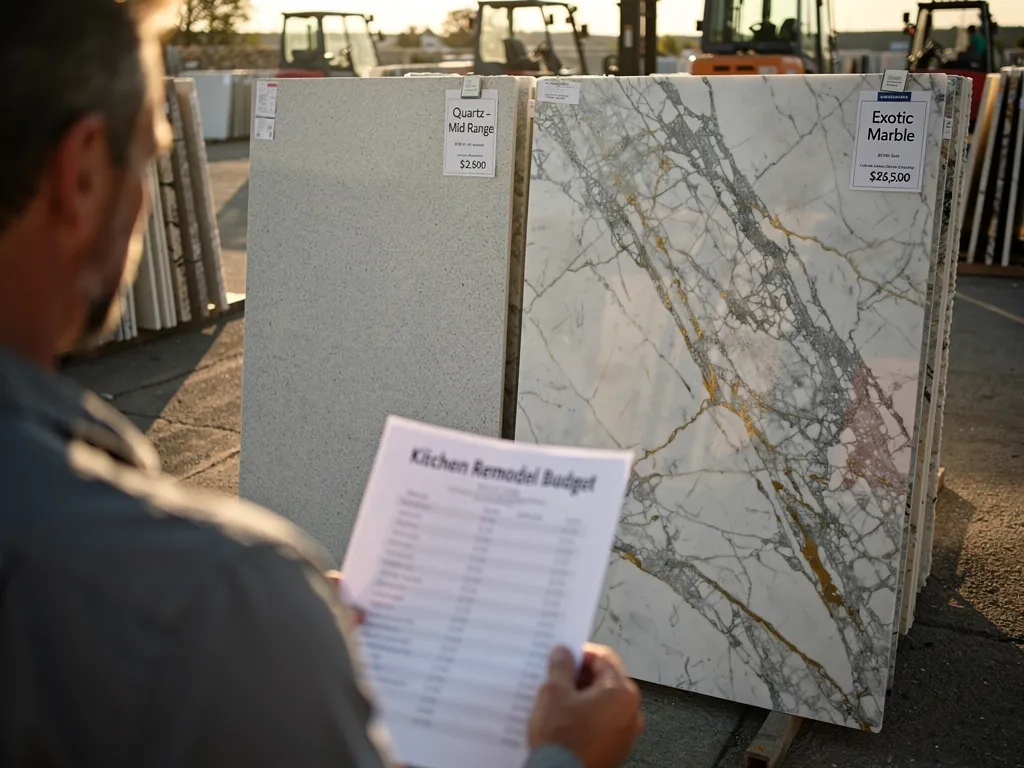
A placeholder number is what lets you shop with a real budget in hand instead of a blank check. Say the countertop allowance is set to a mid-range quartz. Before you ever visit a slab yard, you know an exotic imported marble would run past that line. You’re choosing with the figure already in front of you, not finding out afterward that you picked something the budget never covered.
You should know what the line covers before you shop, not after you’ve picked. It’s also why I show you the placeholder before you set foot in a showroom, not after.
Where value engineering actually saves money
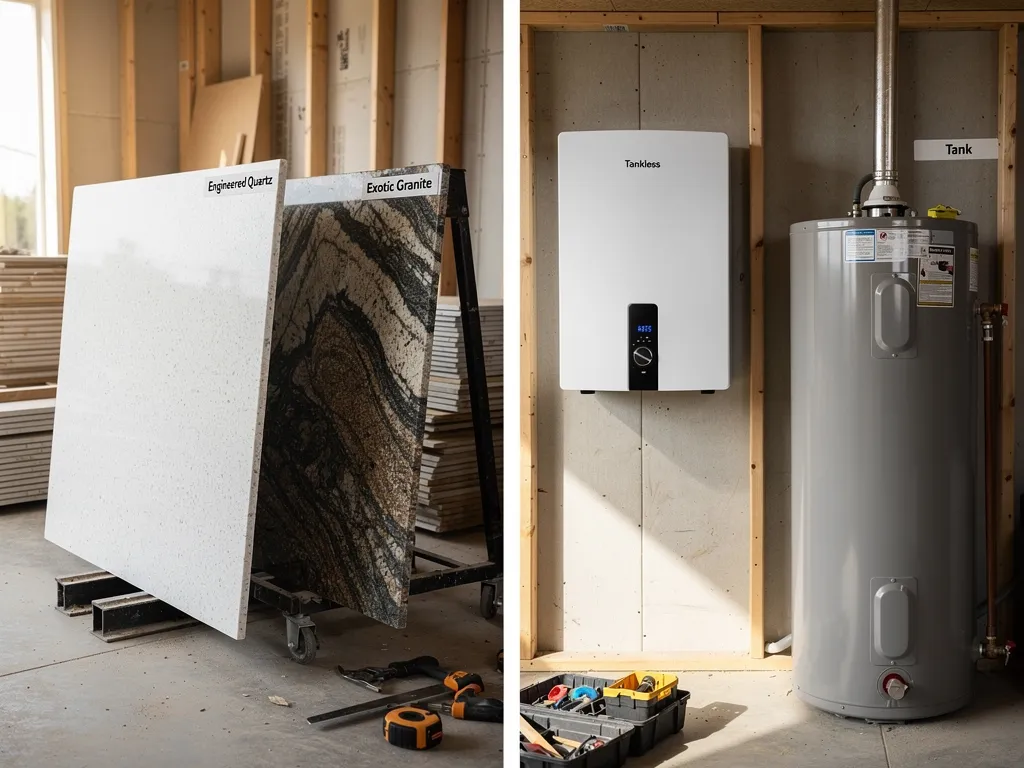
On our builds, value engineering means swapping a material or method for one that costs less without giving up the look or performance you want. Engineered quartz instead of a slab of exotic granite, or a tankless water heater instead of an oversized conventional unit, can shave real dollars off the budget without touching the design intent.
I walk you through these swaps line by line — a tile pattern that uses fewer cuts, a stock cabinet door profile instead of a custom one — so the savings show up where they matter instead of getting absorbed into a vague number.
Lump sum vs cost plus: who carries the overage
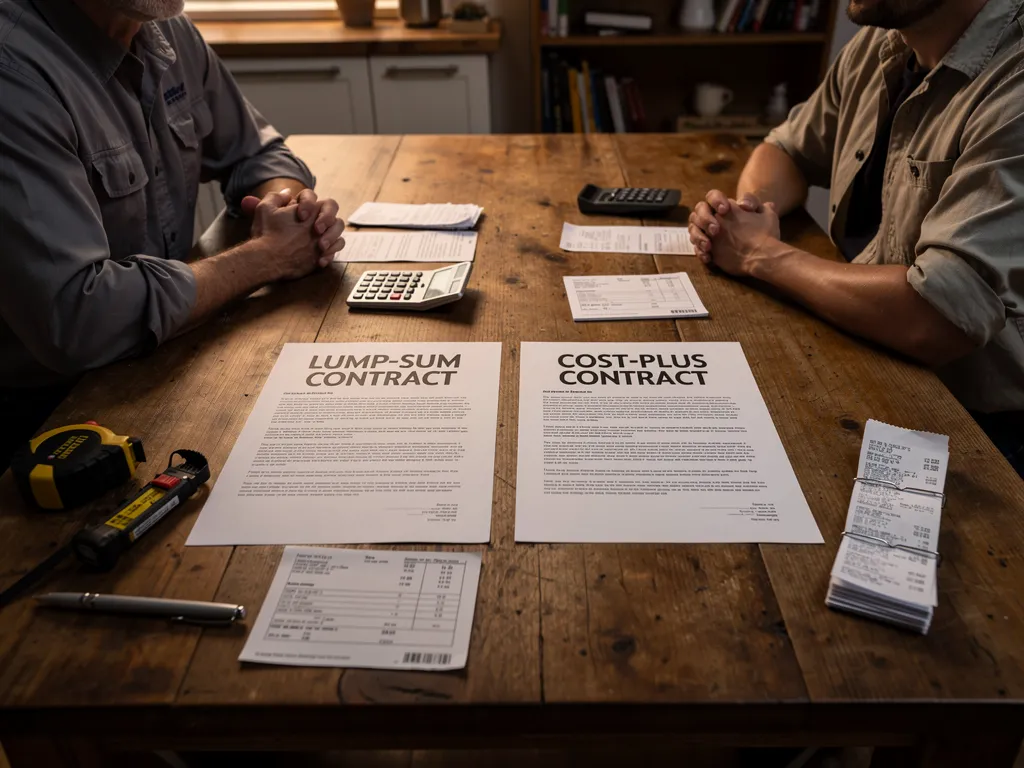
The contract type decides who eats a cost overrun — but not who eats an allowance overage; that risk lands on the client either way.
In a fixed lump-sum arrangement, the builder quotes one total price for the job and carries the risk if the cost estimates run high. If lumber prices jump or a subcontractor’s bid comes in higher than budgeted, that falls on the builder, not the client.
In a cost-plus arrangement, the client pays the builder’s actual costs plus an agreed fee, so the client carries the risk if the job runs long or a trade’s price increases mid-project. The client gets full visibility into every invoice, but also absorbs the swings.
What doesn’t change between the two: if a client upgrades to a higher-grade tile that exceeds the allowance, or moves from a standard range to a professional-grade one, that difference comes out of the client’s pocket under either structure. The allowance line is a budget placeholder, not a price ceiling the builder is agreeing to absorb.
We build every project on a transparent line-item budget rather than a single lump-sum figure, so you can see exactly where each allowance stands as you make selections. Before you sign with any builder, ask how cost overruns are handled under the proposed contract, and walk through how a real cost swing — a framing lumber increase, a tile upgrade — would have played out, so you know exactly where the risk sits.
What to ask a builder about allowances before you sign

When you’re deciding on a builder, the questions you ask about allowances tell you a lot about how the budget will actually run. Here’s what I make sure every client has answered before signing:
What’s included in each allowance, exactly? A tile allowance should tell you whether it covers material only or material and installation — ask me to spell it out.
How often do you update the allowances? Material costs shift; I want you working from a number that reflects what’s happening in the Denver market right now, not a figure from six months ago.
What’s the process if I want to change one mid-project? You should know how a change gets priced and approved before you ask for it, not after.
What’s included in each allowance, exactly? A tile allowance should tell you whether it covers material only or material and installation — ask me to spell it out.
How often do you update the allowances? Material costs shift; I want you working from a number that reflects what’s happening in the Denver market right now, not a figure from six months ago.
What’s the process if I want to change one mid-project? You should know how a change gets priced and approved before you ask for it, not after.
Getting straight answers to these three questions before you sign is what keeps your budget predictable once construction starts.
Questions Clients Ask Me About Allowances
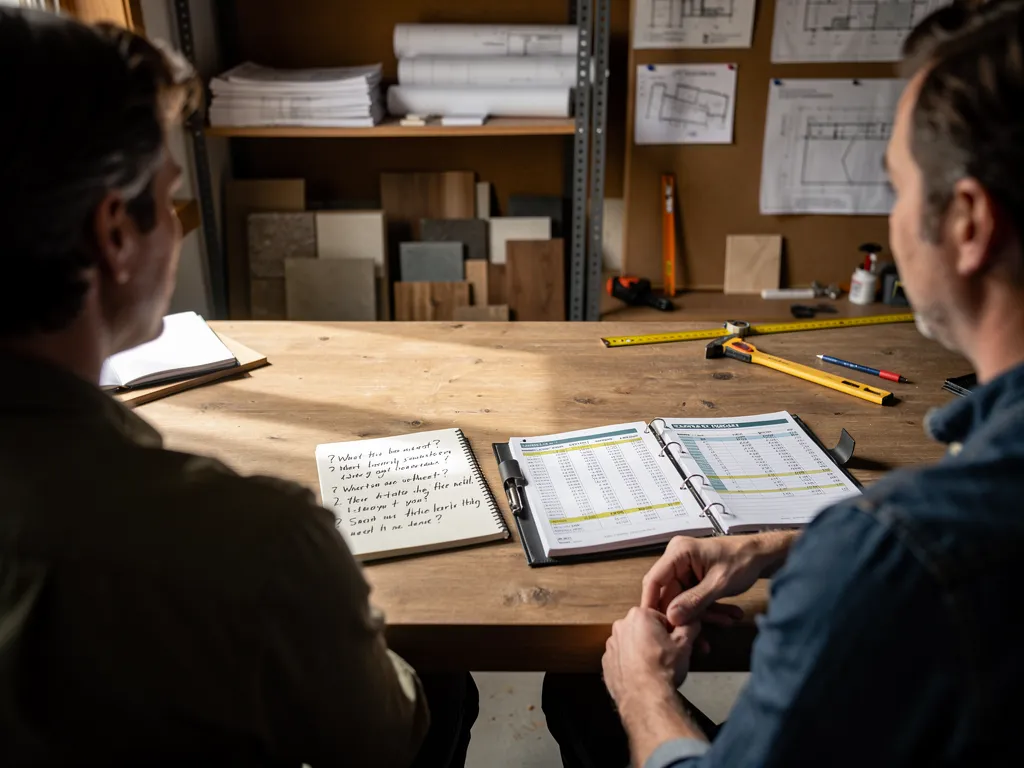
How do you decide what number to put on an allowance line? Every allowance should reflect current market pricing for real, available products in that category — a quartz countertop, a tile line, a plumbing fixture package — not a rounded industry average. That way the number on your budget is one you could genuinely spend at the counter.
What happens if I go over an allowance? You pay the difference between the allowance and what you selected, under any contract structure. I flag it as soon as you make the selection, not at the final invoice, so you can decide whether to spend there or hold the line somewhere else.
Can I change an allowance after we’ve signed the contract? Yes — I build the line-item budget so it can move. If you want to shift money from the tile line to the countertop line, I’ll show you the trade-off before you commit, so the change doesn’t surprise either of us later.
Taking Control of Your Budget with Zelenka Development
An allowance is only as useful as the number behind it and how clearly you can see that number change as you make selections. A lump-sum bid hides the line items that cause overruns; a line-item budget puts every allowance in front of you before you’re standing in a showroom deciding between a mid-range quartz and something well past it. Whether the contract is structured as cost-plus or another arrangement, the allowance line is a starting point, not a ceiling — going over it means paying the difference, so the real protection is knowing what each line covers, how it’s priced, and how it can move before you sign. Ask those questions up front, and the budget stays predictable from the first selection meeting to the last.